


How to paint a Bee
in Watercolour
A lively bee painting using soft washes, layered colour and an expressive cocktail stick!. Perfect for practising texture, colour blending and creating fluffy detail

Materials
-
Watercolour paper, 300lb, Not pressed / Cold Pressed.
-
Brushes: medium and small detail round brush brush
-
Cocktail Stick x 2
-
Kitchen towel
-
Water pot
Colours
-
Cad Yellow (or deep cad yellow)
-
Burnt Sienna
-
Raw Umber (or burnt umber)
-
Ultra Marine blue
-
Crimson
Tip: Raw/Burnt Umber + Ultra Marine Blue = almost black
Burnt Sienna + Ultra Marine Blue + water = grey
Ultra Marine Blue + crimson + yellow = desaturated purple
These instructions are for a black and yellow bee. If you're replacing the black with purple - then use purple with a little yellow to tone it down
Adding a colour's compliment desaturates a colour (tones down the intensity of a colour). E.g. adding a tiny amount of yellow to purple
Have your colour mixes ready and swatch them out

Step 1 – Draw/Trace and Eyes
Draw or trace your bee very lightly on the paper. Minimal detail - just outlines
Mix up a grey light grey and lightly fill in the eyes, leaving a white highlight
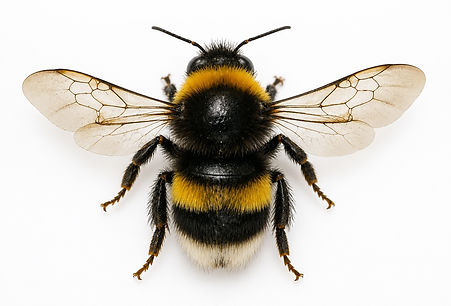

Step 2 – Yellow and grey body bits
-
Reserving some white paper centrally (for highlights), wet the first yellow section lightly with clean water
-
Drop in warm yellows and allow them to spread naturally
-
Add burnt sienna at the top and bottom edges
-
Use a cocktail stick to lightly flick out some fine hairs all around the yellow section
-
Repeat for the remaining yellow section and the grey part at the bottom
-
Let this area dry before tackling the dark segments with the same method. Remember to leave a little white gap (1mm) between yellow and black for now.
Step 3 – Wings
-
Keep the wings light and transparent
-
Add a little creamy burnt sienna where the wings join the body. Use a clean brush to lay down water ahead of this paint. Push the water back into the burnt sienna to encourage it to gently bleed outward
-
Use a very diluted warm grey or yellow wash to fill in the top wings - leave some clear areas as wings are translucent
-
Add a few delicate vein lines using the cocktail stick or any handy pointy thing
DRY -
Repeat for the bottom wings but alter the colour slightly so it leans in a purple direction
DRY -
Once bottom wings are dry, add a cast shadow beneath the top wing, if needed
Step 4 – Legs & Antennae
-
Use quick, confident, thin to thick brush marks for the leg segments
-
I like to pick up a light grey on my brush then dip the end in raw sienna. This give me some interesting colour mixes on the legs
-
Keep legs slightly broken and expressive rather than heavily detailed. I find the hairy ones a bit scary ha ha - but if you want to keep it authentic, flick out some hairs with the cocktail stick
-
Drop some additional colour in here and there if you need, but remember to keep some light areas too
-
Add the antennae with the tip of a fine brush

Step 5 - Details
-
Deepen the darkest areas around the body with creamier paint. Remember to blend this out slightly by pushing water into the edges
-
Add a few splatters for energy and movement. I used Schminke Aqua Bronze powder but you can also use white gouache mixed with yellow, watercolour pencil and sandpaper for pollen.
-
Optional: use tiny touches of white gouache for highlights if you lost yours and a fine liner for quick sketchy marks if needed
Watercolour Tips
✔ Work from light to dark
✔ Let colours mingle naturally on the paper
✔ Keep some light areas
✔ Keep the wings soft, translucent and delicate
✔ Don’t overwork — freshness creates life and movement
I would love to see how you do, tag me on instagram or facebook @kerryslackart

Book Your Spot

Starts Oct 25
From 20 British poundsLoading availability...
Loading availability...

Starts Oct 26
From 20 British poundsLoading availability...
Loading availability...

Starts Nov 3
145.83 British poundsLoading availability...
Loading availability...

Starts Nov 4
125 British poundsLoading availability...
Loading availability...

Starts Nov 7
125 British poundsLoading availability...
Loading availability...

Started Sep 21
125 British poundsLoading availability...
Loading availability...

Ended
125 British pounds
Ended
125 British pounds
Ended
From 115 British pounds